
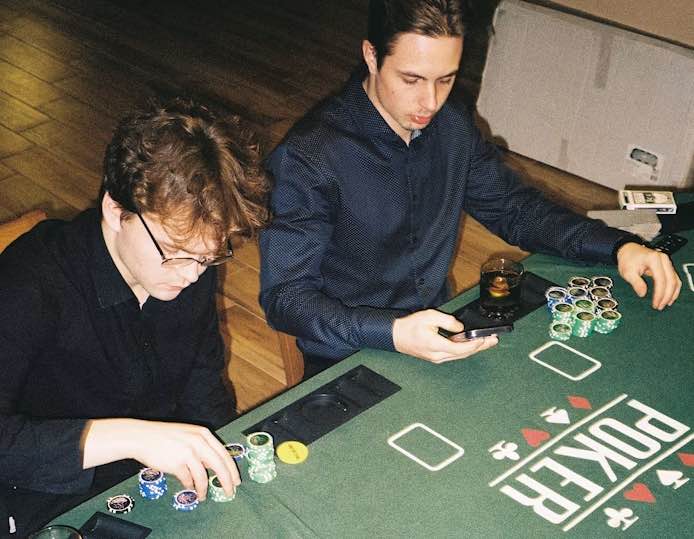
Quick answer: Position tells you how much information you’ll have when you act — late position gives you the most, early position the least — and that single fact should shape which hands you play and how aggressively. Table dynamics go one step further: reading stack sizes, who’s tight or loose, and how the table’s mood is shifting lets you adjust beyond the raw math of position alone. Strong players don’t play a fixed strategy regardless of seat and table — they let both position and dynamics constantly reshape their decisions.
Why Position Is the Foundation of Good Decision-Making
Every decision in poker is easier with more information, and position is the main lever you have to control how much information you get before you have to act. In late position, you see how everyone else has played the hand before you commit any chips. In early position, you’re guessing what’s coming. This is why the same starting hand can be a clear raise from the button and a clear fold from under the gun — the hand hasn’t changed, but the information available around it has.
How to Adjust Your Range by Position
- Early position (first to act): Play your tightest range here. You have no information about the rest of the table, and multiple players still get to act behind you — including the chance of a raise or reraise before the action even returns.
- Middle position: A moderate widening of your range is reasonable, but you still need to respect the players left to act behind you.
- Late position (cutoff, button): This is where you can profitably widen your range the most. You’ll have position for the rest of the hand, and you already know what everyone before you has done.
- Blinds: You act last preflop but first postflop in most cases, which is a mixed blessing — factor in that you’ll be out of position for the rest of the hand even though you got a “free” look preflop.
Reading Table Dynamics Beyond Position
Position tells you when you’ll act. Table dynamics tell you who you’re actually dealing with. A few things worth tracking as a hand and a session develop:
Stack sizes
A player with a short stack is often more willing to commit chips with a marginal hand simply because they have less to lose relative to the pot; a deep-stacked player has more room to maneuver and bluff. Adjust your assumptions about their range based on how much they actually have behind them, not just their typical tendencies.
Watch this video to learn more:
Who’s tight, loose, aggressive, or passive
The same raise means something very different coming from a player who’s entered one pot in the last hour versus a player who’s raised the last five hands in a row. Building even a rough read on each player’s general tendency changes how much weight you give their actions.
How the table’s mood is shifting
Tables loosen up after a few big pots and tighten up after a scare (like a big stack busting someone). Being aware of that shift — rather than assuming the table plays the same way it did an hour ago — helps you catch profitable windows other players are slower to notice.
Combining Position and Dynamics in Real Decisions
The strongest players layer these together rather than using either in isolation. Late position against a tight, predictable table supports a wider, more aggressive range. The same late position against a loose, unpredictable table calls for more caution, since recreational players are harder to push off hands regardless of your positional advantage. Position tells you when to act; dynamics tell you how hard to lean into that advantage.
This layered thinking is really what separates players who are simply following position charts from those genuinely dominating a table — using every piece of available information, not just the mechanical one.
FAQ
Why is late position so much more valuable than early position?
Because you act after seeing what everyone else does. That extra information lets you make better decisions with the same hand than you could from earlier positions, where you’re acting with much less certainty.
Should I play the same range from every position?
No. Tightening your range in early position and widening it in late position is one of the most fundamental adjustments in poker, and skipping it is a common leak even among otherwise solid players.
What table dynamics matter most beyond position?
Stack sizes and player tendencies (tight vs. loose, aggressive vs. passive) matter most. Both affect how much weight you should give to any given bet or raise, independent of where it happened positionally.
How do I get better at reading table dynamics?
Focus on it deliberately during hands you’re not involved in — it’s much easier to observe tendencies when you’re not also making your own decisions. Over time this builds a much sharper read on the table than trying to piece it together only during your own hands.
